On the night of February 26, 2026, the foothills of the Velliangiri Mountains in southern India were alive with quiet energy. Tens of thousands of people walked toward the sprawling grounds of the Isha Yoga Center for Maha Shivaratri, the Great Night of Shiva.
As darkness settled, a gentle chill touched the skin. The sky was deep indigo, and a crescent moon hung low above the vast open space. The monumental Adiyogi Shiva Statue, 112 feet tall, loomed ahead — still, silent, immovable. From the crowd, it seemed almost alive: its gaze penetrating yet calm, as if time itself had paused around it.
At its base, Sadhguru sat cross-legged on a simple platform. The chatter of the crowd softened as he began his discourse, his voice carrying effortlessly through the cool air. Listeners leaned forward instinctively, drawn into a quiet attentiveness, the night holding them in suspension.
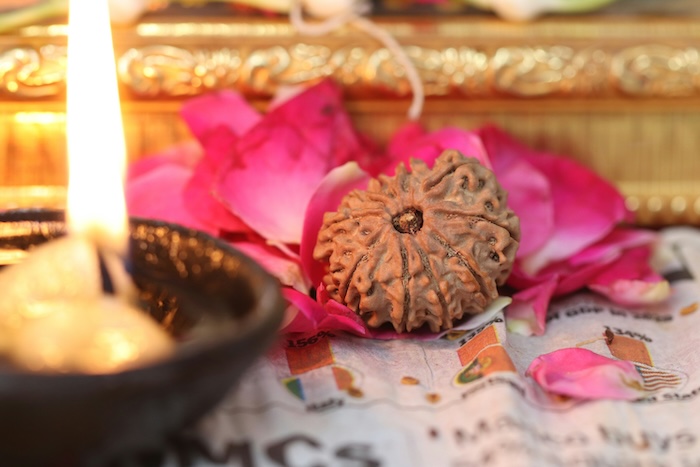
Across Adiyogi’s chest hung a massive garland of Rudraksha (roo-DRAAK-sha) beads — dark, textured, organic, strung together in a necklace that spanned the width of the statue. For many first-time witnesses, the question arose naturally: why this seed? Why has it endured across centuries of yogic culture?
The Legend of a Tear
The story, as Sadhguru tells it, begins with Shiva himself. Shiva is seen as the Adiyogi or the First yogi.
He sat in meditation for an unimaginable length of time, his stillness absolute. Everybody thought he was dead. In that unbroken silence, a tear of ecstasy formed and rolled down his face. That tear fell upon the earth and is called “Rudraksha”.
“Shiva sat in meditation for a long time. His ecstasy was such that tears rolled from his eyes, and these tears fell upon the earth and became the Rudraksha,” explains Sadhguru. (Watch here)
The name itself tells the story: Rudra — a name of Shiva, Aksha — eye or tear. Rudraksha literally means “the tears of Shiva.”
This is not just a legend; it is symbolic. When the mind is utterly still, pure consciousness emerges. From that awareness, natural compassion for life arises. The tear represents that: stillness flowing into care for the world.
A Symbol of Consciousness
Most of life unfolds automatically — we eat, sleep, react, repeat. To wear Rudraksha is to make a choice: to live consciously, rather than compulsively, as Sadhguru says.
For centuries, wandering yogis carried Rudraksha beads with them. It is believed to carry a subtle reverberation, cocooning the wearer in stable energy, particularly useful for those exposed to shifting environments. Small, resilient, worn close to the heart, it became both a spiritual tool and a living reminder.
Today, the symbolism extends to the idea of a Conscious Planet, a movement initiated by Sadhguru. If enough human beings choose awareness over compulsion, their presence alone influences the world — the soil, the air, communities — creating a ripple of consciousness across the planet.
The Night and Its Message
As midnight approached, the crowd sat in meditation beneath the open sky. Sadhguru’s voice guided them. Above, Adiyogi remained perfectly still, the Rudraksha beads glinting faintly in the moonlight, holding the weight of centuries of conscious presence.
A seed born, legend says, from a tear of ecstatic stillness. Small enough to hold in your hand. Vast in meaning.
Rudraksha is not merely a bead. It is symbolic — to pause, become still, awaken consciousness, and let compassion flow.
In that stillness begins the possibility of a Conscious Planet.

Plus receive a free eBook by Sadhguru