
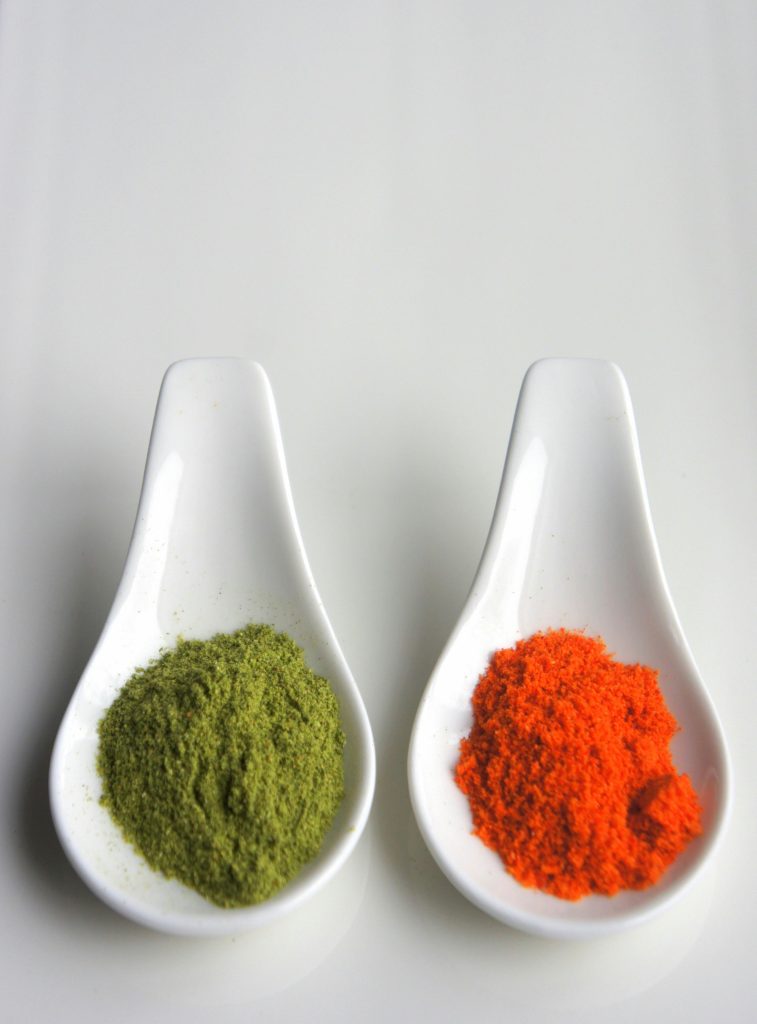
Some substances belong not only to medicine or ritual, but to memory itself. Turmeric and neem are two such presences.
Both have been part of Indian life for thousands of years. Both appear in Ayurveda, in temple rituals, and in the daily practices that sustain balance and wellbeing. Yet for much of their history, they lived very different outward lives.
Turmeric travelled.
Its golden colour made it immediately valued – not only as a medicinal substance, but as a dye and symbol of auspiciousness. It moved along ancient trade routes, carried across deserts and seas into Persia, Arabia, East Africa, and eventually Europe. It was recognised, exchanged, and admired far beyond the soil from which it first emerged. Wherever it went, it carried with it something of the land that had cultivated it – a quiet continuity beneath movement.
Neem remained closer to home.
Often called Indian lilac, neem grew beside houses, temples, and village paths. Its leaves, bark, and oil were used in caring for the body, protecting food stores, and maintaining environmental balance. It did not need to travel to prove its worth. Its presence was enough. Quietly and consistently, it became known as the “village pharmacy,” supporting daily life in ways that were both practical and deeply rooted. Its value lay not in its rarity, but in its constancy.
One became part of global exchange.
The other became part of continuity.
Yet beneath these different journeys, both belonged to the same system of understanding — one that recognised the importance of maintaining balance not only in the body, but in one’s relationship with life itself.
In Ayurveda, turmeric and neem were recognised for their cleansing and balancing qualities. Turmeric was valued for its ability to support the body’s strength and vitality. Neem was respected for its deeply purifying and stabilising influence. Each worked differently, but both served the same larger purpose: maintaining balance within the human system.
It was within yogic traditions that their relationship became more consciously recognised.
Here, the focus was not merely on treating illness, but on creating a system that was stable, balanced, and receptive. The body was understood not simply as a physical structure, but as a foundation for higher perception and inner growth. Supporting its balance became an essential part of the process — not as a remedy, but as preparation.
As Sadhguru explains:
“If you consume neem and turmeric regularly, it keeps the system clean and balanced. It creates a certain stability in the body and energy system, which is very important for anyone on a spiritual path.”
Taken together, neem and turmeric offer a natural complement. One supports cleansing at a deep level; the other supports strength and resilience. One is quietly protective; the other quietly sustaining. Their combined use reflects an understanding that wellbeing is not achieved through force, but through alignment.
In modern life, where so much has been separated from its original context, their conscious use can feel like a quiet act of remembering. Not inventing something new, but restoring something that has long been understood — an intelligence that recognises what supports balance and what disturbs it.
Turmeric may have travelled the world, carrying its golden presence across continents. Neem remained where it was most needed, steady and unassuming.
Yet when brought together, they are no longer separate stories. They are recognised for what they have always been: quiet companions in supporting balance, clarity, and inner stability.

Plus receive a free eBook by Sadhguru