
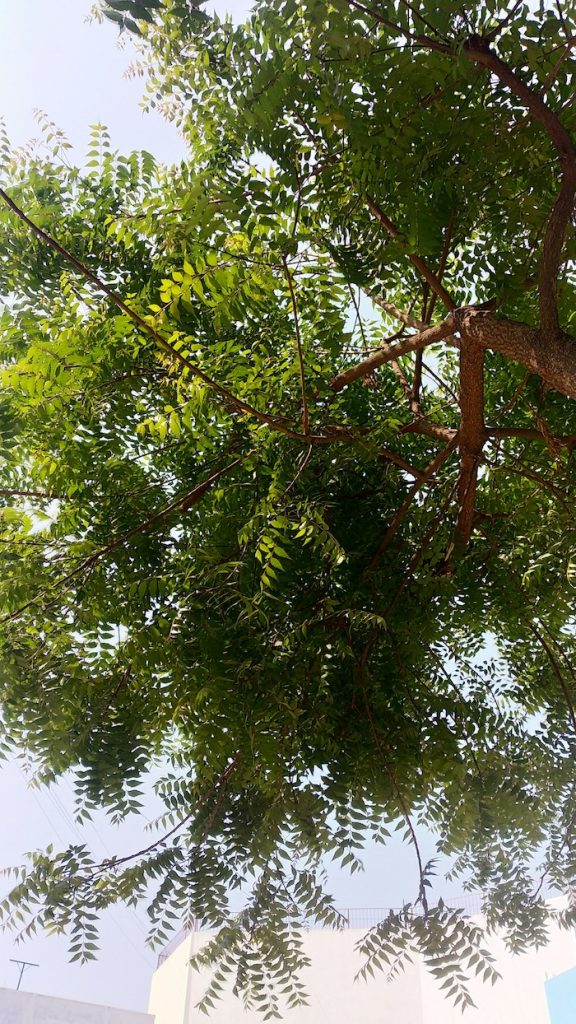
In a 2026 landscape increasingly defined by the high-decibel crises of climate change and the exhausting “lag” of ecological degradation, we often overlook the silent, steely performer that has anchored the Indian subcontinent for centuries. If the modern “smart city” is a flashy, high-budget project that often falters under environmental pressure, the Neem tree (Azadirachta indica) is the ultimate reliable anchor. It doesn’t need a massive power grid to function; it simply exists, and in that existence, it sustains an entire ecosystem.
Ancient Indian town planning wasn’t merely about aesthetics; it was a masterclass in biological engineering. By embedding Neem into the very layout of a dwelling, our ancestors were building a “living shield.” Today, as Western cities grapple with the “urban heat island” effect—where concrete jungles trap lethal amounts of heat—we are rediscovering that the ancient practice of planting Neem in the Brahmasthanam (the central courtyard) was a sophisticated, natural HVAC system. It wasn’t just a tree; it was a cooling mechanism capable of lowering ambient temperatures by a staggering 10°C while the surrounding streets sweltered.
A Performance of Global Resilience
As we navigate an era where soil health is declining globally and synthetic toxicity is rising, the Neem tree’s “script” is becoming a universal survival guide. While exotic, ornamental species wilt at the first sign of a drought-heavy season, the Neem thrives on minimal input. It is the world’s most low-maintenance climate warrior.
For the global challenge of soil degradation, Neem offers a “reset” button:
- The Soil Healer: It doesn’t just grow; it regenerates. Through a process called Phytoremediation, it quietly cleanses heavy metals and toxins from the earth, restoring the ground for future agriculture.
- The Universal Regulator: In the shift toward Regenerative Farming, Neem provides a non-toxic alternative to the chemical dependency that has stripped our lands of their natural vitality. It acts as a guardian for crops without the collateral damage of synthetic pesticides.
The “Digital Detox” Tree
Perhaps its most “out of the box” contribution to our hyper-connected society is its role as a biological and sensory filter. In an age of blue-light overstimulation and constant electromagnetic noise, the presence of Neem—what ancient texts call Tikta (the bitter element)—serves as a grounding force.
The wind blowing through a Neem grove isn’t just air; it is a medicinal atmosphere. Ancient Indian history treated this “Neem-scented air” with the same reverence we might accord a high-end air purifier today. The Charaka Samhita, one of the foundational texts of Ayurveda, noted that the mere proximity to the tree could cleanse the senses. It provides a biological pause button for a generation that is constantly “on,” offering a rare moment of sensory clarity.
The Verdict
Rootedness is a strength, not a limitation. The Neem tree is not a relic of a bygone “period piece”; it is a climate-resilient necessity for any society—from Coimbatore to California—looking for an honest, sustainable anchor. We need to stop treating Neem as a backyard afterthought and start recognizing it as a protagonist in modern urban planning. In the long-term story of human survival, Neem remains the most reliable partner for a warming world.

Plus receive a free eBook by Sadhguru