
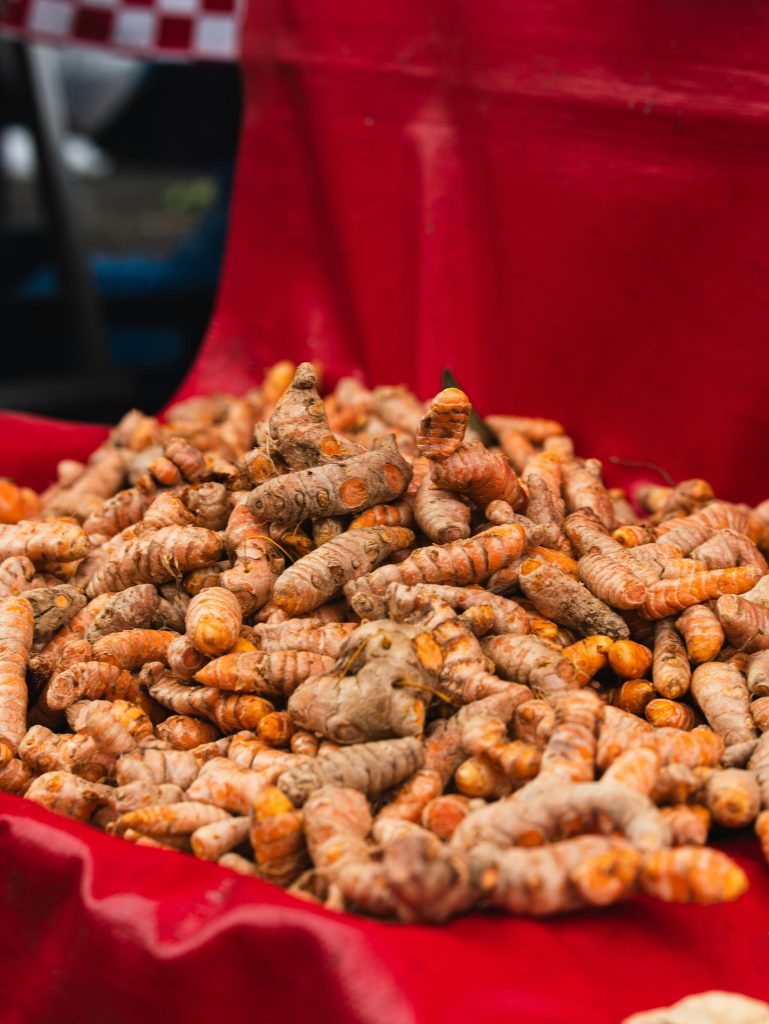
Across many traditional cultures, plants like turmeric and neem have been valued not only for their practical uses but also for the way they connect daily life to the living earth. For generations, these plants have been part of households; used in cooking, natural care, and simple practices that kept people close to the soil that sustains them.
Today, as more people begin to reflect on the importance of healthy soil and sustainable living, growing even a small plant at home can become a meaningful way to reconnect with nature. Turmeric and neem are two plants that beautifully embody this connection.
Growing Turmeric at Home
Turmeric grows from rhizomes – underground stems similar to ginger. This makes it surprisingly suitable for container gardening. If you can find fresh turmeric root, it can often be planted directly in soil.
Choose a wide pot with well-draining soil and place the rhizome just beneath the surface. Turmeric prefers warmth, moisture, and partial shade. In cooler climates it can grow well indoors or in a greenhouse where temperatures remain steady.
Over time, green leaves will appear above the soil while the rhizomes quietly develop below. After several months, when the leaves begin to yellow and dry, the turmeric can be harvested.
Growing turmeric reminds us that much of life’s work happens beneath the surface. While we may only see a small plant above the soil, a whole process of growth is unfolding quietly underneath.
Neem and the Natural Garden
Neem is a hardy and remarkable tree that has been used for centuries in traditional agriculture and household practices. In tropical regions it grows tall and resilient, often planted near homes or fields.
In cooler climates, growing a neem tree outdoors may not always be possible, though small plants can sometimes be kept in containers in warm indoor environments. Even where the tree itself cannot easily be grown, neem still plays an important role in home gardening through neem oil, which many gardeners use as a natural way to protect plants from pests.
Rather than overpowering nature with chemicals, neem supports a more balanced relationship with the environment.
A Simple Connection to the Soil
Tending even a small plant can create a meaningful connection to the rhythms of life. A pot on a windowsill or a small garden bed becomes a place where soil, sunlight, water, and patience meet.
As Sadhguru has said: “If you cultivate a little bit of soil, it cultivates you in many ways.”

Plus receive a free eBook by Sadhguru