
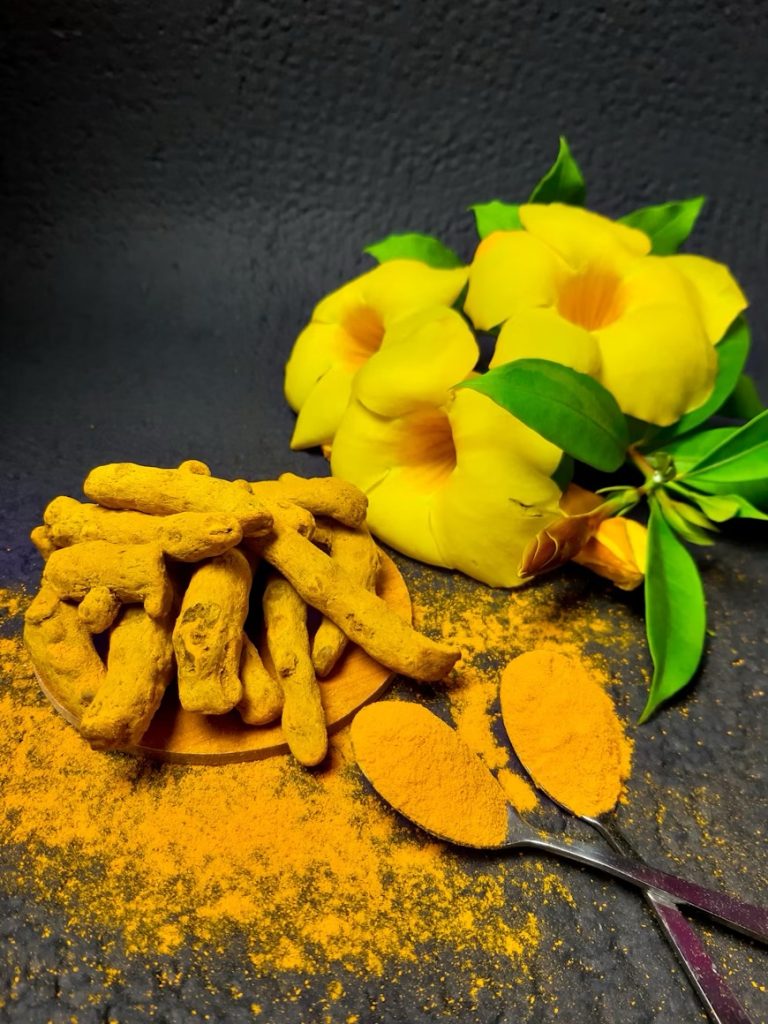
Golden, earthy, and subtly transformative—turmeric is far more than a spice. Long before it became a “superfood” on café menus or Instagram feeds, it had a simple role: to bring flavor, color, and balance to the meals people ate every day.
An Indian kitchen at noon. Sunlight streams through small windows, falling on clay pots and brass utensils. Mustard seeds pop in hot oil, cumin releases its warmth, and curry leaves sizzle. Fresh vegetables from the market or garden wait their turn. Then, almost imperceptibly, a pinch of turmeric meets the oil. The color deepens, the aroma settles, and the dish begins to find its balance—separate elements coming together as one.
Across India, turmeric does its work with elegance. In South India, Sambhar (SAM-baAr), the lentil and vegetable stew with tamarind, rounds the flavors and softens the tang. In North India, Dal (DAHL) it warms lentils, making the dish comforting and easy on digestion. In Bengal – Machher Jhol, it steadies fish and spices, letting the natural freshness shine. In Western India – Gatte ki Sabzi, it harmonizes gram-flour dumplings with yogurt gravy. Turmeric rarely calls attention to itself, yet it ties dishes together, enhancing taste, supporting digestion, and adding subtle nourishment to every meal.
From Royal Kitchens to Everyday Tables
Turmeric’s place in Indian kitchens has always been intentional. In royal courts, chefs paired rich meats and elaborate feasts with turmeric to help the body digest and remain comfortable through long celebrations. Over centuries, this wisdom migrated into home kitchens, where a pinch of turmeric became a daily ritual—a way to brighten meals, nurture the body, and support wellness.
The Great “Curry” Misunderstanding
For many outside India, turmeric is synonymous with “curry”—a catch-all term suggesting bold, overpowering flavors. In reality, turmeric is stabilizing, not aggressive. It harmonizes a dish, creating meals that nourish, support digestion, and leave the system balanced. In slow-cooked stews or simple sautés, it builds flavor and wellness from within.
Turmeric in the Modern Kitchen
You don’t need to master regional Indian cooking to enjoy turmeric. In many ways, turmeric plays the same role a bay leaf does in Western kitchens—subtle, steady, essential. A pinch in soups, grains, roasted vegetables, or broths is enough. Isha-inspired recipes make this easy:
- Golden Turmeric Tea: Warm water with turmeric, black pepper, and honey supports absorption and digestion (Isha Wisdom).
- Lentil or Vegetable Soups: A teaspoon of turmeric adds color, warmth, and gentle digestive support.
- Golden Smoothies: Blend turmeric with ginger, citrus, and plant milk for an energizing start.
Across the world, turmeric performs the same role. In Indonesian Nasi Kunyit (golden rice), Middle Eastern stews, or North African spice blends, it adds warmth, color, and subtle nourishment without ever dominating the dish.
A Pinch of Timeless Wisdom
A single pinch of turmeric is a small act with a long history. It’s the kitchen’s quietest alchemist. From royal courts to everyday kitchens, it has shaped how meals come together, acting as a golden thread that connects generations.
In your own cooking, a single pinch can do the same—bringing a subtle harmony to flavors, bathing food in gold, and supporting your digestion. It doesn’t take much to invite this wisdom in: stir it into soups, scatter it over grains, or blend it into a morning drink. Simple, nourishing, and deeply rooted in India, this is turmeric beyond the curry—turning the everyday into something quietly extraordinary.

Plus receive a free eBook by Sadhguru